As an historic neighborhood dating from the wake of the 1904 World’s Fair, Skinker DeBaliviere and Parkview are blessed with hundreds of beautiful residential buildings. This historic fabric is what knits us together and helps provide value to our neighborhood, aesthetically and financially. This is one reason many of us chose to live here in the first place.
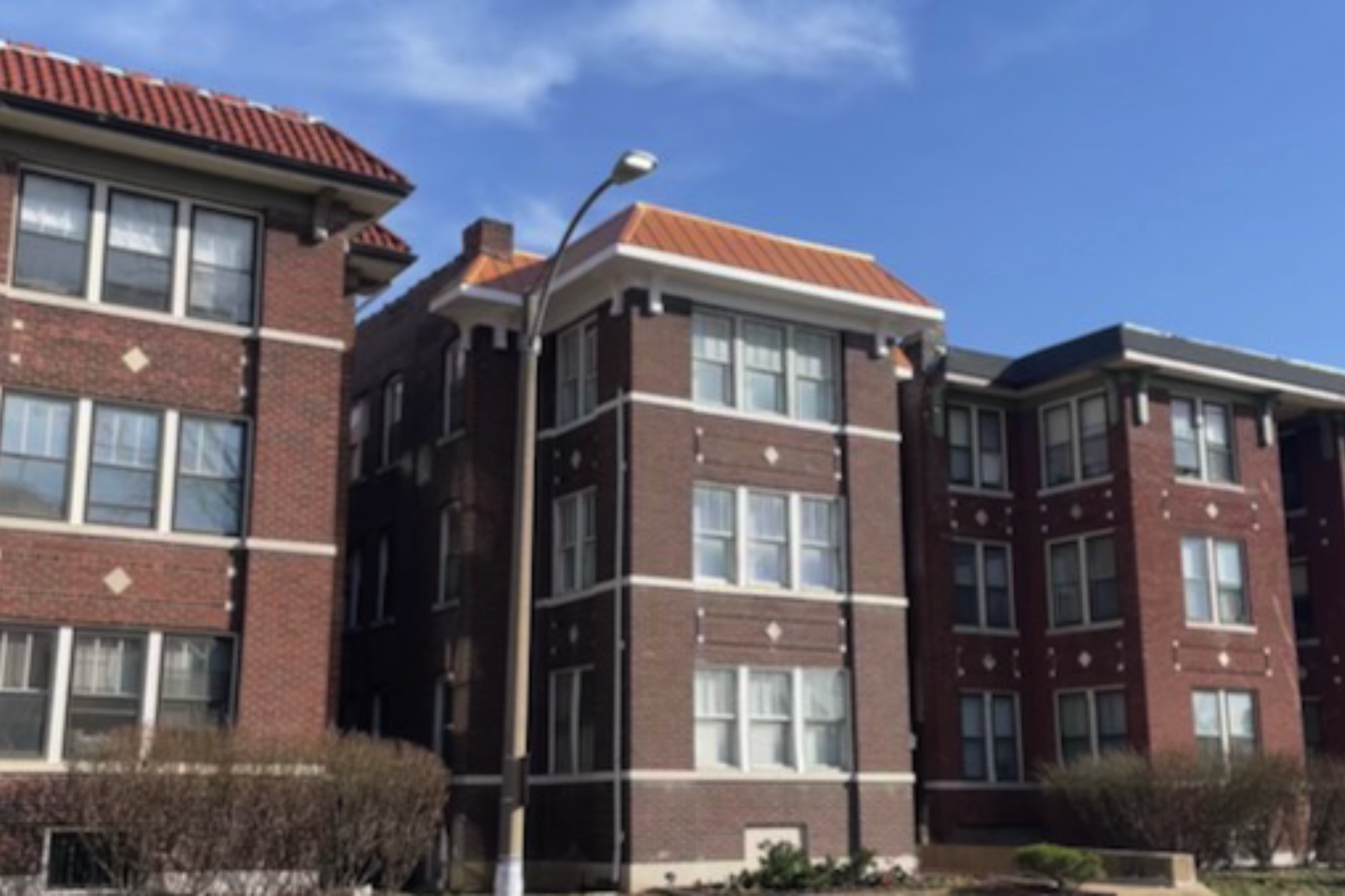
Contributing greatly to the beauty of our streetscapes are the roofs of our historic structures. Together with an amazing diversity of style and line, these roofs originally shared the building materials endemic to the period: stone, brick, slate, and clay tile.
The damage and destruction wreaked by the May 2025 tornado now force us to think more seriously about our roofs than ever before. In particular, we are an official historic district which constrains the how and what of roof repair and replacement.
Like each historic district in the City of St. Louis, our district was established by ordinance. The ordinance contains a set of standards by which we are required to preserve our historic uniqueness, including how residential structures are maintained, repaired, and restored. The details vary among the districts, depending on the features of concern and the standards set forth.
Also established by ordinance to administer the historic district, is the Skinker DeBaliviere Historic District Review Committee, generally known as the Historic District Committee. This Committee is also a standing committee of the Skinker DeBaliviere Community Council. The Committee exists to review major work on the structures in the neighborhood, educate neighbors on historic homes and their maintenance, and assist neighbors with historic home questions or issues.
Because roofs are such an important visual feature, it should be no surprise the district has a special section in its standards and guidelines devoted to the do’s and don’ts of roofs and that major roof work often involves review from the Committee. Key points of the Standards include, but are not limited to:
- Roofing work generally requires a permit. The city of St. Louis mandates that permits are pulled for “an entire new roof, when roof work is not replacement of like material, and/or when more than 25% of the roof sheathing is removed and replaced.”
- Whenever possible, the historic materials must be maintained or replaced in like and kind. Strictly speaking, this means slate is replaced with slate or clay tile with clay tile.
- Existing shingle (grandfathered in prior to the 2018 Standards) can be replaced with medium gray shingle. This is why we see variety in the neighborhood.
- However, there are some new composite materials that have been approved as replicas for the slate and tile. Examples include Brava and DaVinci products. These should be considered secondarily to historic materials. The manufacturers’ website can be consulted for local contractors and sample products. We do have some samples on hand in the SDCC office.
- Metal roofing is most definitely NOT an approved material.
Readers will no doubt see there are, unfortunately, many violations of the Standards throughout the district. Some are grandfathered in before the ordinance took effect. Others are simply the result of ignorance of the Standards. Still others are the result of ignoring the Standards altogether, installing the cheapest roof as quickly as possible. Technically, these are violations of the ordinance.
The Historic District Committee strives to maintain the integrity of our neighborhood. Property owners should consider the Committee a resource. All are urged to contact the Committee for advice and assistance in navigating the regulations governing the repair of their roofs.